
Should You Build an ADU in San Diego? What It Costs and What It Rents For
I get asked about ADUs more than almost anything else these days, from sellers wondering if it'll boost their home's value to buyers specifically shopping for a lot that could fit one. It's a genuinely hot topic in San Diego right now, and for good reason — but the numbers involved are bigger than a lot of people expect going in. Let me walk you through what it actually costs, what it can actually rent for, and how to think about whether it makes sense for your situation.
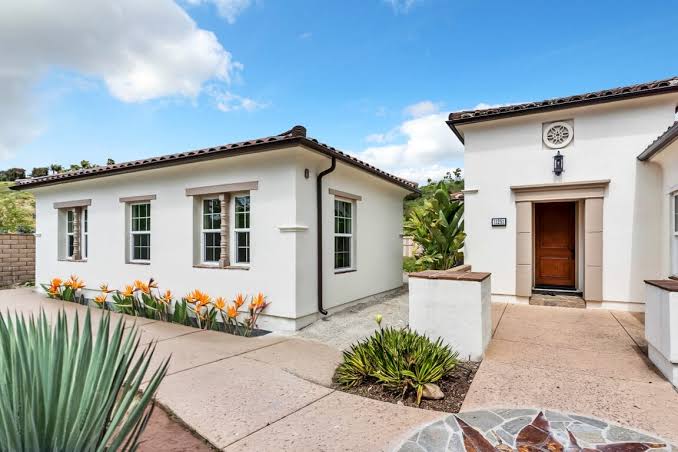
What "ADU" Actually Means (And Your Options)
An ADU — accessory dwelling unit — is a self-contained living space on your property, separate from your main house. In San Diego, you've got a few paths to get one:
A detached ADU is a standalone new structure in your backyard — the most expensive option, but also the one offering the most privacy and the strongest rental appeal. A garage conversion turns your existing garage into a livable unit, which is significantly cheaper since you're not building a structure from scratch. A JADU (junior ADU) is a smaller conversion, often within your existing home's footprint, typically the least expensive way in. And there are increasingly popular prefab ADU options, which can speed up the timeline compared to fully custom construction.
Importantly, California doesn't require you to live on the property to rent out an ADU, and San Diego allows them in all residential zones — this isn't some niche loophole anymore, it's a mainstream path a lot of homeowners are taking.
What It Actually Costs in 2026
This is where I see the most sticker shock, so let's be direct about it. A detached ADU in San Diego typically runs somewhere between $300,000 and $450,000+ for a fully finished, move-in-ready unit, with cost per square foot generally falling in the $300-$600 range depending on finish level and site conditions. Garage conversions are considerably cheaper, typically $80,000 to $200,000, since you're working with an existing structure instead of building one from the ground up. JADUs can come in as low as $50,000-$80,000 depending on scope.
On top of construction, budget for permit and impact fees, which can add anywhere from $5,000 to $20,000+ depending on your specific city and unit size — notably, ADUs under 750 square feet are currently exempt from most impact fees under state rules, and units under 500 square feet skip school fees entirely, which is a real savings if you're willing to build smaller. Utility connection fees, landscaping and site restoration after construction, and furnishing if you plan to rent it out all add up too — plan for these as real line items, not afterthoughts.
What It Can Actually Rent For
Here's the number that makes the investment make sense for a lot of homeowners: 1-bedroom ADUs in San Diego are typically renting in the $2,400-$3,400 per month range as of 2026, with coastal neighborhoods like La Jolla, Pacific Beach, and Encinitas commanding the top of that range, and inland areas like El Cajon and Chula Vista running somewhat lower. ADUs also tend to rent at a premium compared to standard apartments, since tenants are paying for privacy and a standalone feel that apartment living doesn't offer.
Running the math on a fairly typical scenario — a $325,000 detached ADU renting at roughly $2,800/month — you're looking at annual net rental income in the neighborhood of $27,000 to $30,000 after expenses, which works out to something like an 8-10% cash-on-cash return. That's a genuinely strong number compared to a lot of other real estate investment strategies right now.
Does It Actually Add Home Value?
Beyond the rental income itself, a permitted ADU can meaningfully boost your property's resale value — San Diego homes with a properly permitted ADU are generally selling at a real premium, with some estimates suggesting a value lift in the range of $150,000-$225,000. That's on top of whatever rental income you've collected in the meantime. It's one of relatively few home improvements that can pay for a meaningful chunk of itself twice — once through monthly cash flow, and again at resale.
What to Watch Out For
A few honest caveats before you get too excited about the math above. Permit and fee schedules vary significantly by city within San Diego County — Escondido and San Marcos tend to process faster and cheaper, while coastal cities like Carlsbad and Encinitas run higher fees but also support stronger rents, so the two often offset each other. If you're in an HOA, check your CC&Rs before you get attached to the idea — some communities restrict or prohibit ADUs outright. And your property taxes will increase once the ADU is assessed, which is a real ongoing cost to factor into your return calculation, not just the upfront build cost.
ADUs also aren't a quick-flip strategy. They make the most sense for homeowners with real equity and a longer time horizon — either to hold as a rental, house a family member, or add long-term value before an eventual sale. If you're planning to sell within the next year or two, the return on investment math gets a lot less compelling once you factor in construction timelines.
Is It Right for You?
If you've got the equity, a property that can accommodate one, and a multi-year time horizon, an ADU is one of the more genuinely compelling ways to add both monthly income and long-term home value in this market right now. If you're weighing whether your specific lot and budget make sense for one — or whether you'd be better off putting that capital elsewhere — I'm happy to talk through it honestly, including connecting you with contractors and designers I trust if you decide to move forward.
Curious if an ADU makes sense for your property? Let's talk through the real numbers.
Lucas Monari
REALTOR® | DRE# 02163562
(858)405-5018
sd.soldbylucas@gmail.com
Coldwell Banker West
Categories
Recent Posts




GET MORE INFORMATION